Stand the bottle upright, ease out the cork and pour slowly into a clean decanter. Use a light behind the neck to watch for sediment, and stop before it pours out. Allow some time before serving, usually less for a very old bottle.
Vintage Port develops sediment as it ages. Decanting keeps it out of your glass and gives the wine some air.
What you need
You’ll need a corkscrew, a clean decanter and a small torch. Have a cloth ready to wipe the bottle’s mouth, plus a funnel and clean muslin if there is a heavy deposit or the cork breaks.
A clean jug or empty wine bottle will do if you don’t have a decanter. Get it ready before opening the Port.
How to decant it, step by step
-
Stand the bottle upright
Stand the bottle upright a few hours before opening so loose sediment can settle at the bottom. Handle it gently when you move it.
This is especially useful if the bottle has recently been moved. Let it settle before decanting; the times in the table below are for the wine after it has been poured.
-
Clean the neck and remove the cork gently
Remove the covering around the neck and wipe away any dust. Ease the cork out slowly. Taylor’s recommends a waiter’s corkscrew for the control it gives with older corks.
If the cork crumbles, pour through a funnel lined with clean muslin to catch the pieces. Let any sediment disturbed while opening settle again before you pour.
For a fragile or broken cork, see how to open an old bottle of Port, including two-prong and combined openers.
-
Pour slowly and watch the neck
Put the light behind the neck so you can see the wine passing through it. Tilt the bottle gently and pour in one steady stream. Avoid stopping and starting, or tipping it so far that the wine glugs out.
If there is a white paint splash on the bottle, keep it uppermost as you pour. It marks the side that faced up while the bottle lay in the cellar.
-
Stop when the sediment reaches the neck
Stop when you see a dark trail or cloudiness approaching the mouth. If you are unsure, pour the last wine into a separate glass. Add it to the decanter if it is clear; leave any sediment behind.
Clean muslin in a funnel can catch a heavy deposit. Avoid paper coffee filters, which can leave unwanted smells or flavours in the wine.
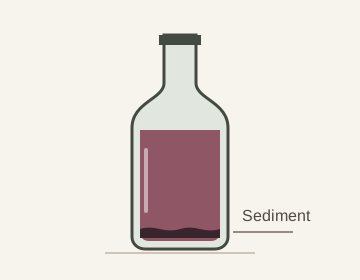
1. Let the sediment settle

2. Pour slowly and steadily
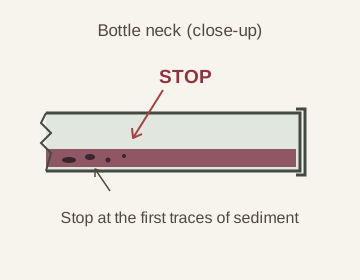
3. Stop as sediment reaches the neck
How long before serving should you decant?
Charles Symington recommends these times on The Vintage Port Site:
| Age of the Vintage Port | Starting point |
|---|---|
| Up to about 40 years | 2–3 hours |
| Older than about 40 years | 30–60 minutes |
Start with these times and taste as you go. Try a little when you open the bottle and again before serving. If an old Port already tastes good, serve it.
Check the producer’s instructions for your bottle. A young, firm Port may need more air; a delicate old one may be ready sooner.
Serving temperature and leftovers
Serve it cool, following the producer’s advice. Taylor’s recommends 16–18°C for its 2017 Vintage, cooler than many heated rooms.
Plan to enjoy an old bottle that evening. If there is wine left over, put it in a clean bottle, close it and refrigerate it. A smaller bottle leaves less air above the wine.
Portugal’s Port wine regulator, the IVDP, suggests one to two days for opened Vintage Port. Aim to enjoy leftovers the following day, though how well they keep depends on the wine and how it is stored.
Does this apply to single-quinta Port and LBV?
Single-quinta Vintage Port
Single-quinta Vintage Port can develop sediment too. Graham’s recommends decanting its Quinta dos Malvedos Vintage Port. Pour it in the same way and check the producer’s advice on timing.
Late Bottled Vintage
Filtered LBV, such as Taylor’s LBV, can be poured straight from the bottle. Unfiltered LBV can develop sediment and may need decanting. Fonseca recommends it for its unfiltered LBV and Crusted Port.
Check the full name on the bottle and look for decanting instructions on the back label or the producer’s website.
For a closer comparison, read Vintage Port vs LBV and single-quinta Port.
Choosing a bottle
Use the maturity tool to look up a house and year, or compare recorded vintages in the Port vintage chart. The best-years guide links to individual wines and their estimated drinking windows.
Sources
- Taylor’s — How to serve Port
- Taylor’s — Decanting
- Taylor’s — 2017 Vintage Port
- Symington — Decanting Vintage Port
- Fonseca — Decanting Port wine
- Taylor’s — Late Bottled Vintage
- Graham’s — Quinta dos Malvedos Vintage Port
- Graham’s — 1983 Vintage Port serving instructions
- IVDP — Choose and enjoy Port
- Quevedo — Keeping wine after opening
About PortDB and how the guide is compiled · Suggest a correction